How to Import Travertine Stone from Turkey Without Overpaying
If you’ve ever fallen in love with those creamy beige tiles in a luxury hotel lobby or the weathered, stone-paved courtyard of a Mediterranean villa, there’s a good chance you’ve already met Turkish travertine stone — without even realizing it.
And if you’ve ever tried to buy travertine tiles or travertine pavers for your own project, you probably also met the sticker shock.
Here’s the truth: Turkey produces some of the best travertine stone in the world, but most importers — from small contractors to large developers — end up paying 20–40% more than they should.
Why?
Because they either don’t understand the natural stone supply chain or they let middlemen do all the sourcing.
We’ve been in the raw materials and mining game for years — from dusty quarry roads in Denizli to stone fairs in Verona. I’ve helped buyers in the US, Europe, and the Middle East import travertine stone for everything from backyard patios to outdoor travertine pool decks to five-star resorts. And I’ve seen both sides of the coin: deals that saved tens of thousands, and deals where buyers unknowingly burned cash.
This guide? It’s everything I wish first-time importers knew before they wrote their first deposit check.

💎 Why Turkey is the Global Leader in Travertine Stone
First, a little context. Turkey isn’t just “one of” the big players — it’s the heavyweight champ of the travertine stone world.
Quality: Turkish travertine stands out for its special density & big color range. It goes from plain beige to flashy silver. This look is tough (sometimes almost impossible) to copy.
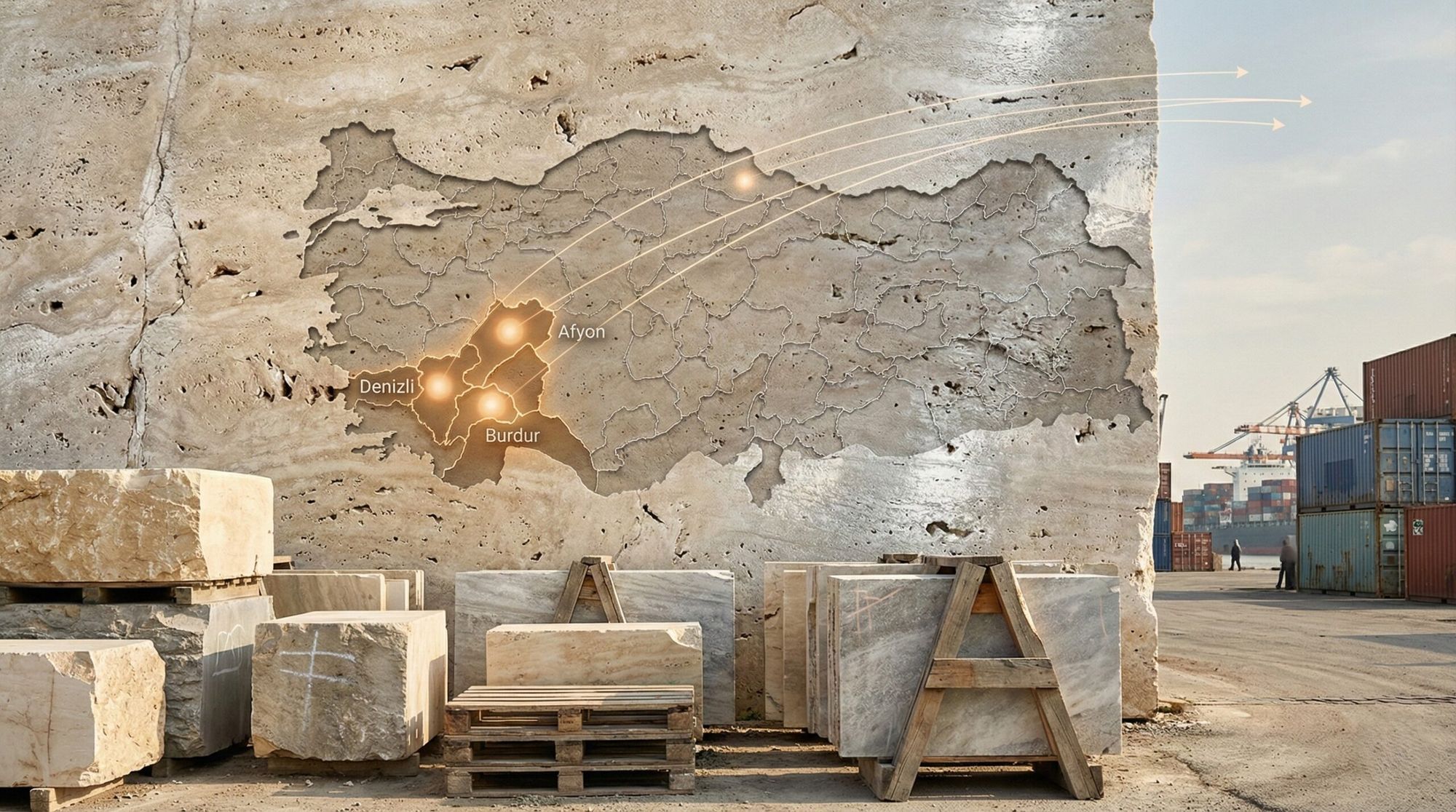
Volume: Turkey has lots of travertine stone in the ground — especially in Denizli, Afyon, & Burdur.
Variety: Polished travertine tiles, tumbled pavers, split-face stone cladding, honed slabs — whatever you want, it’s here.
Cost: Despite the premium quality, quarry prices are often lower than Italy, Spain, or the US, if you know how to buy.
💡 Fun fact: I once stood in a quarry in Denizli where they were cutting massive blocks of silver travertine stone. The same stone was being shipped to Italy, processed, and then sold back to the US as “Italian Travertine” — at triple the price. That’s how much markup happens in this industry.


🔍 Understanding the Travertine Stone Supply Chain
If you want to stop overpaying, you have to know where the money leaks happen.
🪨 From Quarry to Your Project
Every piece of travertine stone — whether it’s a small mosaic tile or a 2-ton slab — starts its life in a quarry. Workers cut massive stone blocks from the earth, then transport them to a processing plant.
At the plant, the blocks are:
Cut into travertine slabs or tiles
Finished (polished, honed, tumbled, brushed)
Graded (premium, standard, commercial)
Packed for export
Then the travertine stone moves into the hands of:
Distributors or wholesalers: These guys buy in large amounts. They keep stock. They later sell for a higher price.
Retailers: They break down bulk orders into smaller lots, adding another markup.
Every time the travertine stone changes hands, the price goes up — sometimes by 100% or more between quarry and end buyer.

📋 Step-by-Step Guide to Importing Travertine Stone from Turkey
Step 1 – Identify Your Exact Specifications
Don’t contact a supplier with “I need travertine stone tiles.” That’s like walking into a car dealership saying, “I need a vehicle.”
Instead, know your:
Finish: Choices include polished, tumbled, brushed, or filled/unfilled. Choose what you like.
Grade: It goes from premium (all the same), to standard (some small changes), or commercial (more mixed up).
💡 Pro Tip: Have a specification sheet ready. Suppliers take you more seriously, and it’s easier to compare quotes.

Step 2 – Find Reliable Turkish Travertine Stone Suppliers
This is where most people go wrong — they stop at the first Google result or Alibaba listing.
Better options:
Direct quarry websites (often less flashy, but cheaper prices)
Stone fairs in Turkey (Izmir Marble Fair) or international shows (Marmomac in Italy)
Industry platforms like StoneContact
💡 Pro Tip: A good supplier won’t just send you a price — they’ll send photos, videos, and technical data for the travertine stone you’re buying.

Step 3 – Request Samples & Confirm Quality
Don’t skip this. Ever.
I once had a client order 500 m² of “beige travertine stone” without samples. When it arrived, half of it had a pink hue. They couldn’t use it for the project’s color scheme.
Check for:
Porosity – Fewer holes = better durability
Color uniformity – Especially important for large projects
Finish quality – No scratches, chips, or uneven polishing

Step 4 – Negotiate Pricing
Travertine stone is usually priced per square meter (m²) or per ton.
Use per m² for finished tiles and outdoor pavers
Use per ton for raw blocks or unfinished slabs
💡 Pro Tip:
Try to order in winter (the off-season). You might get a way better rate.
Ask about B-grade or overstock for non-premium projects
Negotiate payment terms — many suppliers will take 30% deposit, 70% before shipping

Step 5 – Understand Incoterms for Travertine Stone Imports
Incoterms — they show who moves the stone, who pays for insurance, & who deals with risks at each step.
EXW (Ex Works): You handle everything from the supplier’s door
FOB (Free On Board): Supplier delivers to Turkish port, you handle shipping
CIF (Cost, Insurance, Freight): Delivered to your port — you handle customs and final delivery
💡 Pro Tip: If you’re new to importing travertine stone or marble products, start with CIF for simplicity. Once you’re experienced (or have a good freight forwarder), FOB often saves money.

Step 6 – Arrange Shipping & Customs
Most travertine stone is shipped in 20ft or 40ft containers.
Use wooden crates for protection
Ask about fumigation certificates if your country asks for them
Always double-check HS codes, or things could get stuck at customs for a long time
💡 Pro Tip: Remember to add up import fees & local delivery before you set your final budget.

🌍 Long-Term Benefits of Picking Quality Travertine Stone from Turkey
Buying travertine straight from a Turkish supplier isn’t just shopping. It’s a smart, long-term choice — these stones last & look good for ages.
Lasts Through Tough Weather
Strong travertine tiles & pavers from Turkey are good even in really hot, cold, or wet places. They don’t lose their look (or break down fast). Works for floors indoors & patios or pool decks outside.
Always Looks Good
The warm, natural colors of Turkish travertine fit in anywhere — classic, new, or even old-fashioned styles. Use it for a villa’s wall, or a shiny hotel floor — it will still catch your eye years later.
Saves Money Over Time
Importing big amounts right from Turkey means no extra dealer fees. That keeps costs down. Plus, top quality stone doesn’t need a ton of fixing later.
So Many Ways to Use (Really Handy!)
Bathrooms, garden paths, split-face wall tiles — travertine fits homes & businesses alike.
Raises Property Value
A job done well with travertine boosts your property’s look fast. Smart move for builders, designers, & families.
So, in the end — travertine from Turkey gives you beauty, strength, and value all in one. Get it from real suppliers, and you’re making a choice that’s good not just now, but for a long, long time.