Travertine and Marble for Outdoor Spaces: The Ultimate Buyer’s Guide to Best Deals
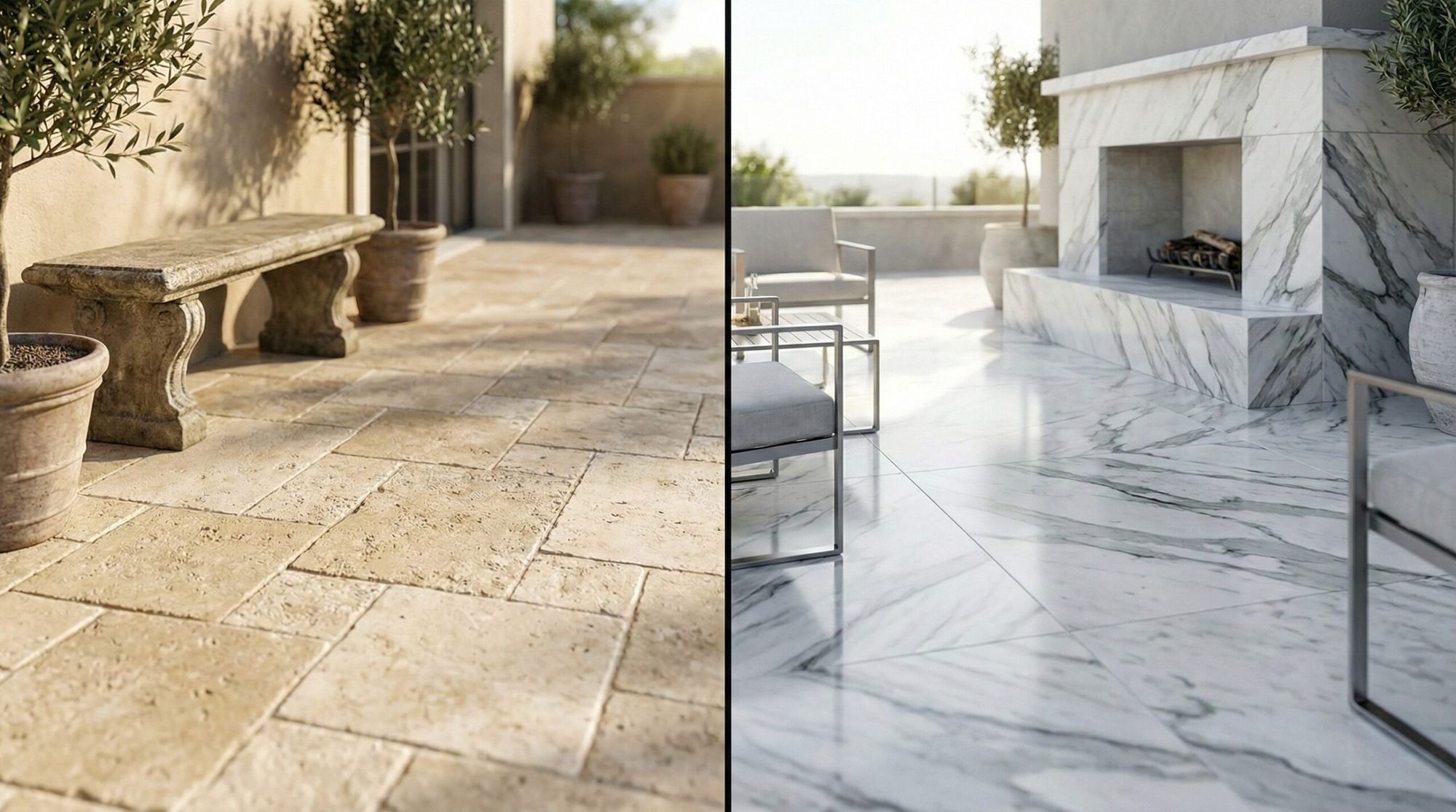
If you’ve ever wandered across a luxury hotel pool deck and thought:
“This is the perfect surface… cool, smooth, but not slippery.”
…there’s a good chance you were walking on travertine stone pavers.
Or maybe you’ve sipped coffee on a polished terrace that made you feel like you’d stepped into a Mediterranean villa — in that case, marble tiles were probably the secret ingredient.
Here’s the thing: the beauty of travertine and marble outdoors doesn’t just happen. It comes down to picking the right stone, the right finish, and a reliable natural stone supplier. Get any of those wrong and you risk faded colors, surface cracks, or dangerously slick walkways after just one season.
We've spent more than ten years between travertine quarries in Turkey, and I’ve seen it all — from dream results to costly do-overs. This guide will help you land firmly in the “dream result” category.

⛏ Travertine and Marble: What You’re Really Working With
📜 How They’re Made
Travertine comes from mineral-rich hot springs. Over centuries, these minerals build up into stone with a naturally bumpy surface and small holes. Its warm colors and timeworn look are reminiscent of historic European streets and courtyards.
Marble starts as limestone deep underground. Heat and pressure transform it into a harder, shinier stone with beautiful natural veining that can stop you in your tracks.
The key difference: Travertine is less slippery, especially when tumbled, making it ideal for wet areas. Marble, while stunning, is much smoother — and can become a slip hazard unless treated for grip.
🎨 How They Look Outside
Travertine – Soft beige, walnut brown, silver, and gold tones that blend naturally into landscapes, pools, and gardens. Its subtle look works seamlessly with stone, water, and greenery.
Marble – Bright whites, creamy ivories, deep blacks, and striking veining for a bold, luxury feel. Perfect for making a statement.

🌡 Which Is Nicer on Your Feet in Hot Weather?
In summer heat, travertine stays cooler underfoot thanks to its natural porosity — making it a favorite for pool decks. Marble, while gorgeous, can heat up quickly under direct sun. Many designers use both: travertine for pool surrounds, marble for shaded patios or decorative steps.
🌦 Weather Performance
Travertine – Handles freeze-thaw cycles well and resists pool chemicals when properly sealed.
Marble – Very durable, but can be etched by acidic rain or plant matter. Best used in mild climates or under cover.
Sealing – Always seal before and after installation. Travertine should be resealed every 1–2 years for maximum protection.


🌿 Where Each Stone Excels Outdoors
Travertine
✅ Pool Decks & Coping – Cool underfoot, non-slip, chlorine and saltwater resistant.
✅ Garden Paths – Adds rustic charm and blends into natural landscapes.
✅ Exterior Walls & Cladding – Brings warmth and texture to exteriors.
Marble
✅ Luxury Patios – Elegant, polished surfaces under covered areas.
✅ Outdoor Kitchens & Bars – Durable, upscale worktops for entertaining.
✅ Decorative Walls – Creates dramatic focal points in courtyards or terraces.
🎯 Picking the Right Travertine and Marble Finish for the Job
Travertine Finishes
Tumbled – Rounded edges, slip-resistant, ideal near water.
Brushed – Soft texture, reduces glare.
Honed – Smooth matte finish, modern yet safe.
Marble Finishes
Sandblasted – Anti-slip texture for open patios.
Leathered – Gentle, touchable surface that hides marks.
Honed – Matte surface, safer than polished marble outdoors.
💡 From the field: I saw a hotel replace polished marble pool decking after just one rainy season due to slip hazards. They switched to tumbled travertine — no accidents since.


💰 Price & Handy Tips for Travertine and Marble
Travertine – $25–$50/m² depending on grade and finish.
Marble – $40–$100/m² for outdoor-grade finishes.
Care Tips
Sweep regularly.
Rinse with water occasionally.
Use pH-neutral cleaners.
Wipe spills immediately to prevent stains.
🛠 Installation & Maintenance Essentials of Travertine and Marble
Substrate Prep – Build on a solid, compacted base with proper drainage slope.
Grouting – Use flexible, weather-resistant outdoor grout.
🏆 What’s the Real Deal?
It’s not “travertine vs marble” — it’s about matching the stone to the job.
- Travertine – Cool underfoot, timeless, and easy to maintain.
- Marble – Luxurious, bold, and perfect for high-impact design.
Choose a trusted supplier, match the stone to your climate and space, and you’ll create an outdoor area that will look incredible for decades.
